

One Year of Exterminations
Practical Advice on how to Publish a Book

One year ago, I published on Amazon my book titled “Exterminations.” It has sold nearly 500 copies so far, with several favorable reviews. The Kindle edition is at present #314 out of the more than 70,000 books in the “International and World Politics” section on Amazon. Not bad for a self-published book, a one-person effort with only minimal promotion on Amazon. The creature you see on the cover can be seen as the angel of death, but you can also interpret it as the representation of an “egregore” — a virtual creature that arises in groups of people and societies, and which may lead to exterminations
The traditional way of publishing a book involved little more than finding a publisher who would take care of editing it, printing it, and then promoting it, and paying royalties to the author. Not a way to become rich, but it would provide a modest income. My first book, “La Fine del Petrolio” (The End of Oil), went through this process in 2003. I remember I had an editor who checked my text, a very professional fellow who, on several instances, scolded me for my mistakes and my poor Italian. He was right — I learned a lot from him.
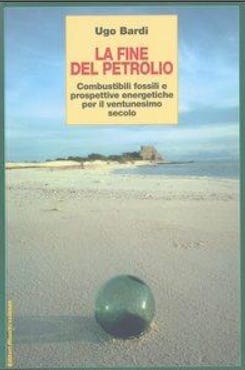
Then, the editor chose a front cover. I commented that it would have been nice for a book titled “The Death of a Christmas Tree,” but it had nothing to do with crude oil. But, as I discovered later, publishers want to hear no nothing from the author after the contract is signed. They can do what they want, and they do. Anyway, the book was published, and it sold a few thousand copies. Not so bad.
Later, a few publishers still did a good job with my books, and I can cite Chelsea Green as still having professional people in 2014 for my book “Extracted” (apart from forcing on the book a title more suitable for a treatise on dentistry than on mineral depletion). That was the last good experience I had with publishers Then, it was the Seneca Cliff.
Every new book I published was an experience worse than the previous one. One of the worst ones was when the publisher subcontracted to an Indian lady the proofreading of my text. A nice person, but I had to spend a lot of time correcting her English mistakes. Later, there was simply no more proofreading, at least with the scientific publishers that published the books I wrote. What I sent to the publisher was published as it was. And readers were not happy about the unavoidable typos and mistakes, blaming me as the author.
The latest rounds of book publishing were true disasters. Unprofessional people who painted themselves as top-level publishers. They ask authors for money up front, and then to sign contracts amounting to indentured servitude, and, of course, they do nothing to promote your book. The latest publisher I dealt with was at least honest. He told me, “Look, I’ll print a hundred copies of your book. You buy them from me, then it is up to you to sell them or give them for free to your friends. And that’s the deal.” More honest than those who promised me royalties, and then simply forgot to pay them.
Of course, all that is true if you are one of the average magma of authors who try to have their voice heard. If you are part of the small group of poster boys of some high-ranking publisher, then you can still have the full publishing experience that was the rule 20 years ago. If they think they can make some money with your manuscript, they may well edit it to death, turning good ideas into an unrecognizable slop — but this is another story.
So I decided that it simply wasn’t possible that you would give the copyright of your work for free to people who would only grant you a pittance in terms of royalties and do nothing to promote your book. And I started seeking new ways to publish my work. Of this experience, I can tell you a few things
There may still be serious publishers around, but most of them are scams. That’s especially true for scientific publishers, who have no interest in your book being bought by interested people. They work on the scheme that academic institutes will buy “packages” of their catalog, and the more books they have in print, the more showy their catalog can look. One good thing is that they won’t normally ask the author for money. But the author doesn’t get any royalties on these purchases, and they make sure he/she won’t get any by setting the book price at a stellar level. That is, if they grant you royalties, which is becoming rare.
Literary agents may be more serious professionals than publishers, they have a personal reputation to defend and maintain. But they are interested only in people who already are strong-selling authors. They will generally ignore you, unless you are one of them or you are very lucky. At least, this is my experience. You may try your luck with one of them, and maybe you’ll hit a good one.
Book-creating companies. They are not exactly publishers, but they promise to you that they will turn your manuscript into a sellable book and upload it to outlets such as Amazon. They normally also promise that they will promote your book to the major media. I have no direct experience with them, but I scanned their sites. They look like scammers, they behave like scammers, they sound like scammers, so they probably ARE scammers — at least most of them. A survey on X and Reddit shows that large numbers of people are complaining that these companies have indeed scammed them, asking them for money and then doing little or nothing of what they promised to do: sloppy editing work, poor book design, and a front cover that looks like it was designed by a homeless person in LA in exchange for a hamburger. Maybe some of them are serious people, but it is their business model that just doesn’t work. They ask you to pay up front for a service, and after you sign the contract, they have no interest in doing a good job. At least, though, unlike in the case of conventional publishers, you retain your copyright and you’ll have a book that you can promote via other channels.
Book-promoting services. This is about the same as the book-creating company. I have some experience with them. Some of them are serious people, some aren’t. The serious ones are expensive, but they may do a good job. The problem is how to know which category they belong to.
Professional Consultants. There are several of them advertising their competence on the Web. They will do things such as proofreading, book formatting, cover creation, book upload to selling sites, and the like. Some will help you write your book better (“book doctors”). I am experimenting with some of them right now, not book doctors, but professional book formatting services. They are expensive, but they are motivated to do good work since their reputation is at stake.
Do it yourself. This is a perilous road, which is said to be punished by the publishers’ mafia. It may be, but it is also the most promising road. It is not so easy, but nowadays it is not impossible as it once was, when the various steps of producing a book were handled by specialized professionals (copyreaders, typesetters, printers, graphic designers, etc.). My experience in using apps and AI tools with “Exterminations” has been good, even though there is a learning curve that must be climbed. It is not Mount Everest, though, and it can be done with a little patience and hard work.
So, let me tell you how I did it. Of course, these are only suggestions. It is up to you to experiment and find the best way for your specific needs.
— A Word processor. I used MS Word. Libre Office can do the same job. Amazon wants you to work with the docx format for ebooks, but converting to it is possible.
— A reference-managing app. A scientific book has hundreds of references; managing them requires a specific app. I used Zotero, which is free. It makes mistakes, but with a little experience, you can “tame” it, and it works wonders. Unfortunately, Zotero references are not compatible with Kindle, and that may force you to redo the whole job from scratch using Word’s reference manager when you publish your ebook.
— A grammar and style checker. I used Grammarly, which is not too invasive and, at the same time, reasonably priced. A human proofreader can still do a better job, but at a much higher cost. I tried a few AI-based style checkers, and in my opinion, they are a disaster: they want to rewrite your text the way they want. No good.
— AI writing assistants. Do NOT use AIs to write parts of your book, the result is pure slop. But they may be very useful to check the statements of your text. An AI will discover all sorts of mistakes and slips, although it will often want to steer you into political correctness. And you have to counter-check, because they hallucinate a lot. Oh, yes, they do! But double-checking everything with the help of an AI is a good way to avoid mistakes. For this purpose, I found that all the commonly available AIs, Grok, ChatGPT, Claude, Deepseek, and the like, are approximately equivalent.
— Book formatting software. These are apps supposed to transform your manuscript into a formatted book that you can upload to a publishing site. I tried a few, but eventually I discarded them all. They are a waste of money when you can do the same job, and better, using a good word processor such as Word or Libre Office — it takes some time to learn how to do that, but it can be done.
— Cover creating software. Amazon’s cover-creating app will create a cover, but — urgh — they will try to force your cover into what they think a cover should be. A combination of AI imagery and Canva can do much better in creating near-professional level images. Of course, not everyone is a professional illustrator, so it is up to you to decide whether to hire one for your book. They will normally do a much better job than an amateur.
— Book publishing apps. I have experience only with KDP (Amazon). They have good book uploading software, but of the kind that I would describe as another form of indentured servitude. You must format your book the way Amazon wants, not the way you want. But they are the leading Web-based book publishing company, and you simply cannot ignore them. Their built-in publishing app will accept PDF files and doc/docx ones for print versions, and it works fine. Kindle Create is the sort of app that I would call akin to being forced to juggle balls while walking on a plank over a pit full of snakes. But it is the way to upload ebooks to Amazon: you have to use it, like it or not. So far, I’ve published only with KDP (Amazon), but it is possible to use other similar services, such as IngramSpark and Lulu — these different platforms are compatible with each other. I plan to explore these possibilities as soon as I can.
And that’s it. Of course, different people have different experiences, so you may have used other methods. Comments on this post are welcome!
What a fountain of good information for those who have a book to publish. I shared this with several of my friends, Ugo. My muse prefers music video collage so I'll stay with obscurity.
I guess I got super lucky, I've really had a fantastic experience with Bloomsbury. A dedicated editor who supports my work, a great graphic design team who listened to my preferences for the covers, decent proofing, assistance with translations, and nominations for prizes. I'm sticking with them for my next books.