

Does Dementia Rule the World?
Trump is going to turn 80 in 2026. How about his mental health?

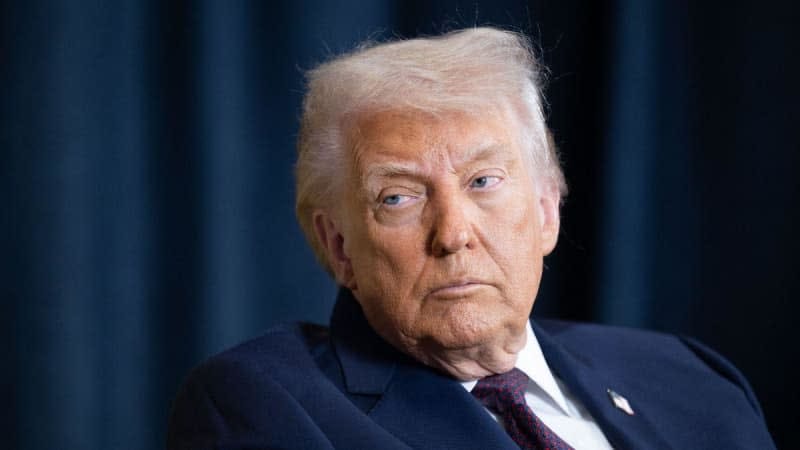
Donald Trump is going to turn 80 in June 2026.
As the world is engulfed in more and more madness, we can’t avoid noting that Donald Trump will soon turn 80 — and what about his mind and his brain? His father, Fred Trump, was diagnosed with “mild senile dementia” when he was 86, in 1991, and, evidently, his sickness must have started earlier than that. Eventually, Fred Trump showed all the symptoms of terminal dementia before he died in 1999.
During the past few weeks, the impression that there is something wrong with Donald Trump’s mind seems to be becoming diffuse — see, for instance, this article by Robert Kaplan. In the NYT, David Brooks spoke about Trump’s damaged psyche. Recently, Slovakia's Prime Minister Robert Fico used the word “dangerous” to describe the impression Trump made on him. These allegations seem to be accumulating, although vehemently denied by Trump’s entourage. It is a situation that reminds that of Joe Biden before it became clear to everybody that he had crossed the barrier to the great grayness.
Of course, it may be a psyop operation created by Trump’s enemies. But the more I watch Trump’s trajectory, the more it reminds me of my father. Trump, it seems to me, is in the initial phases of the path that would lead my father to develop dementia and die from it at 92. But, initially, he would show hyperactivity, stubbornness, loss of control, extravagant behavior, freewheeling statements, and the refusal to listen to other people’s arguments. A behavior that looks very much like Trump’s one.
In the case of my father, this phase seemed to enhance and exaggerate some typical traits of his personality. He had always been a generous man, and he lost a good fraction of his savings by being too generous to people who didn’t deserve his generosity. He had always been affable and easygoing, but then he became obnoxious and sometimes offensive. He had always been intelligent and quick-minded, but that led him to misunderstand things and situations and make awful mistakes. Fortunately, he never became aggressive with other people, probably a consequence of his good-natured soul.
We may try to translate these considerations to Trump. I think we may see his recent behavior as an exaggerated enhancement of his previous personality traits. He was a businessman, and it seems that his style in business was to be shrewd and aggressive, and today he is applying this attitude to his dealings with people and foreign governments. Fortunately, business does not normally involve physical violence, so Trump, so far, has refrained from pushing the US into a major war. As it is typical in negotiations, Trump’s style seems to involve pushing the adversary to the limit, but eventually retreating before arriving at a physical confrontation.
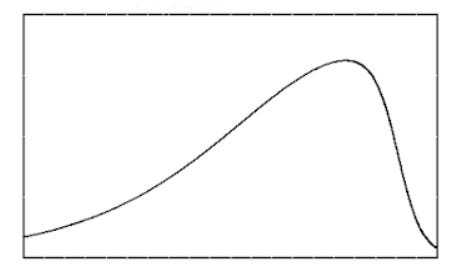
If he maintains this attitude, we may perhaps avoid a major disaster. But if his mind is really declining, as it seems to be the case, we may expect him to be able to do enormous damage to everything and everybody. Dementia follows a typical Seneca Curve: it starts slowly, but then ruin is rapid.
Below is a text I wrote 10 years ago and that prefigured the current situation.
From Cassandra’s Legacy, 2016 (slightly edited)
No ghost in the machine: is humankind suffering of a global Alzheimer disease?
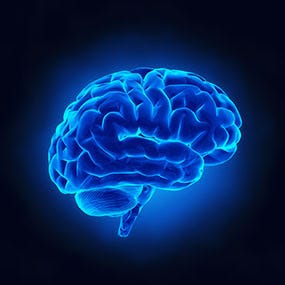
The human brain is the most complex thing we know in the universe. It is also fragile and prone to malfunctioning. Civilization is also a complex system, fragile and prone to malfunctioning. Perhaps some ailments of the human brain, such as Alzheimer’s disease, have their equivalent at the civilization level. (image source)
My parents had been married for 58 years when my mother died. It was a terrible loss for my father, then 86 years old, and I was very worried about his health. But I was relieved when I saw that, after a few months, he seemed to have recovered from the shock. He remained active, and he could manage his everyday life without special assistance. He could take the bus alone and walk in the neighborhood, even making new friends and spending time with them.
However, something was wrong. Terribly wrong.
I remember a conversation that my father had with my son about some plants growing on a steep slope of the garden. He wanted to cut them down and my son, a geologist, was trying to explain to him that it wasn’t a good idea; the roots of these plants were keeping the ground of the slope stable. I watched that conversation, more and more distressed, while my father kept building up all sorts of arguments to counter my son’s. It went on, perhaps, for one hour, and it ended with my father not having budged an inch from his position, leaving my son and me looking at each other, baffled.
That conversation was the first evidence of the onset of dementia in my father. At that time, I didn’t really understand what was going on, mainly because I didn’t want to. But the symptoms kept mounting until they were unmistakable, until my father died at 92, his mind gone. Nevertheless, for a few years, he managed to hide his mental decline. He had always been intelligent and brilliant, and he developed all sorts of strategies to avoid finding himself trapped in a situation that would show his problem. He would get out of trouble with a joke, a witty comment, a humorous quip, or simply by changing the subject.
But my father could get away with his problem only with acquaintances. For the members of his family, his condition was evident. Maybe you know the metaphor of the “ghost in the machine;” it says there is a little ghost in the brain or somewhere that controls the bigger machine, the human body. That ghost wasn’t inside my father anymore. He was gradually becoming akin to an answering machine, a very sophisticated one, but a machine. Like an answering machine, he wasn’t listening, the ghost was gone.
This story from some years ago came back to my mind as I was reading an article by David Dunning, titled “The Psychological Quirk That Explains Why You Love Donald Trump“ You may know Dunning in relation to the “Dunning-Kruger” effect, a feature of the human mind that makes people convinced that they are competent in some subject, and that makes them the more convinced, the less they know about that subject. Of course, the Dunning-Kruger effect is not the same thing as Alzheimer’s disease, but in his article, Dunning highlights the fact that there is a mental problem with many people engaged in political debates. I think it is true. There is such a problem.
When I read or hear Donald Trump’s statements, I can’t avoid thinking about that ill-fated conversation when my father argued with my son about cutting those plants in the garden. It was the same kind of exchange: people who just appear to be debating but aren’t understanding each other. In the political statements by Donald Trump, I see something of the way my father would react during the initial stages of the disease. The same unsupported statements shot at random, the same absolute certainty shown by someone who has no idea what he is speaking about.
That doesn’t mean that I can say that Donald Trump has Alzheimer’s. He might; others seem to have noticed something wrong in his behavior (h/t Clark Urbans for the link). But there is no way to diagnose Alzheimer’s with any certainty when it is in its early stages. But the problem is not specifically with Donald Trump.
No, this sensation of discussing with an Alzheimer patient often comes to me when following a political discussion in the media or in the comments of a blog or on social media. The debate doesn’t seem to be among people who listen to each other. It is among people who throw statements at each other as if they were tennis balls. Think of tennis players: they are not interested in the ball color they play with, only to throw the ball back to their opponents as fast as possible. So, in these debates, people don’t seem interested in the meaning of what’s being told to them, just to throw something back at their opponents as fast as possible.
Do you know the debate tactic called the “Gish Gallop”? It involves drowning an opponent in a torrent of arguments, one after the other, ignoring the counterarguments. It can be used by perfectly sane people, but it is also the ideal strategy to conceal one’s mental disease. It also describes very well the strategy that my father used for that purpose.
So, those people whom we call trolls, our politicians, our leaders, are they just nasty, or are they sick? How many people in high-level positions could be affected by Alzheimer’s disease and yet be smart enough to hide the early symptoms? We already had a president, Ronald Reagan, who may have been in the early stages of Alzheimer’s during the last period of his presidency. That may not have caused big problems, but don’t you have the sensation that the world is ruled by people affected by some form of dementia?
Could it be that we suffer from an Alzheimer-like civilization disease? That would explain why civilization never arrives at doing something useful about the terrible threats it faces, firstly, climate change. Maybe there really is no ghost in the machine we call civilization. It is a giant creature that stumbles around while arguing with itself in an endless squabble and getting nowhere.
____________________________________________________________________________
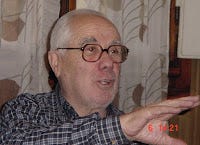
My father, Giuliano Bardi (1922-2014), was an architect and a high school teacher. As an architect, he didn’t have the chance to build many structures, but those he built showed the cleanliness of lines typical of the modernist architecture school. He designed and built the house where he lived until his death and where his family still lives. I remember him for his keen spirit of observation that allowed him to discover unsuspected details on anything. He was also a brilliant teacher, much loved by his students. So much so that at his funeral, many of them remembered him well enough that they came to say farewell to him for the last time.
I'm a retired physician/psychiatrist/addictionist and Long COVID survivor now beset at 80yo with prostate cancer and the medieval treatment regime most popular. I have written extensively analyzing the mental problems of Our Mad King Donald the 1st and Co. on my substack.com "Greeley's Newsletter". I treated 25K+ patients and wrote 1 M Rx. One in 8 American men will undergo treatment for prostate cancer in our lifetimes. What we are not told is that the Lupron hormone blocker we're injected with brings on an almost immediate dementia, short-term memory loss. My father died at 78 after suffering for 2yrs. from a botched operation on his abdominal aorta. He despised his only child, a son, me, and never hugged me, said a kind word to me, or told me he loved me. Only recently, after much thought and research, have I realized that he was just repeating how he had been treated by his own father, after the death of my grandmother from the Spanish flu. Only now, with this information, have I been able to forgive him. Ugo, your appear to have been blessed with a loving father and I'm sorry you had to see him devolve with dementia. I treated many hundreds of Alzheimer's dementia patients, many poor, and sent them to the local health food store to purchase and consume three things: Vit B 12/folate, DHEA, and the seaweed Kelp. This simple regime restored their memory in nearly every case. Have a blessed day and thanks for your moving family remembrance.
Thank you for your touching lines about your father !
Several months ago, a few American observers, having a good knowledge of such diseases, pointed the fronto-temporal dementia, a receding of the brain and accordingly a loss of synapses, glie, neurons, beginnig near the forehead, and going on.
There are some clues so typical, that when a person who was talking to me about a nonagenerian, a common acquaintance, and how he sometimes rambles, I recognized at once the syndrome described by the authors of posts re this topic. A brilliant man, up to a few years ago, (un confereziere molto ricercato).
At the moment, I retain this hypothesis. You certainly heard about what filtered of the comments Mr. Fico made after his recent visit to DJT in Florida.
Best regards