

Artificial Intelligence: A Magic Wand to Solve all Our Problems?
A comment on Emad Mostaque's book: The Last Economy

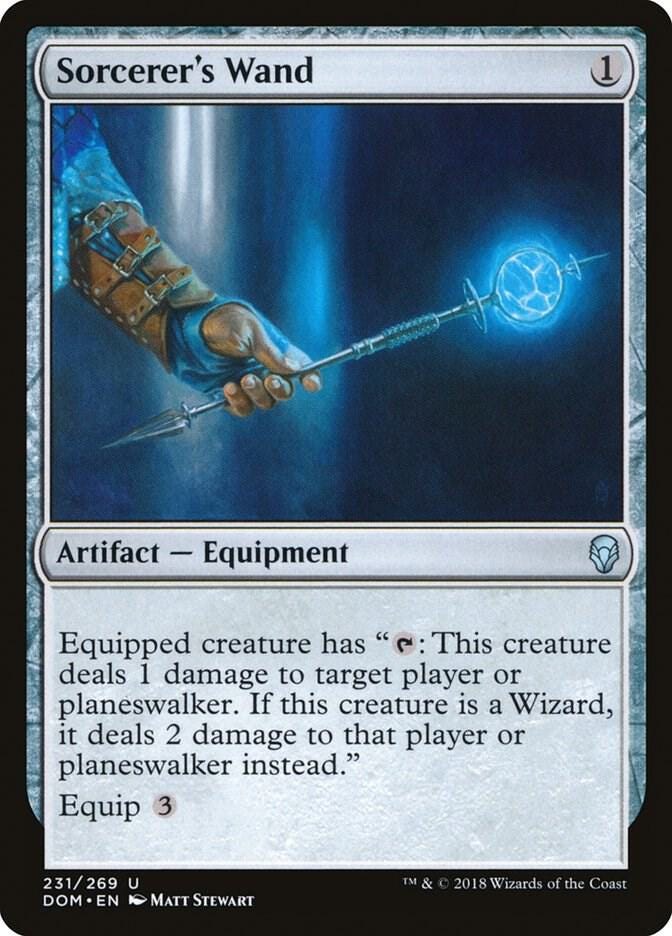
Merlin the Magician could wave away the physical laws with his magic wand. The real world, though, is another matter, and its laws cannot be ignored. Not even by Artificial Intelligence.
Around 1492, the Benedictine abbot Johannes Trithemius wrote a treatise, In Praise of Scribes, defending the holy labor of copying manuscripts by hand against the new and vulgar printing press. Hand-copied books, he argued, were morally and spiritually superior.
Emad Mostaque opens his book, The Last Economy (2025), telling the story of Trithemius as a warning to the reader: you are the scribe, AI is the press, and unlike Trithemius, you do not have fifty years to adjust.
It is a good story. But note that Trithemius reached for Gutenberg’s diabolical machine the moment he wanted to be read. The same man who criticized the press let it print him anyway. He was not a fool, but his understanding of what was going on was only partial. Mustaque’s book suffers from the same problem: interesting, fascinating, and worth discussing, but with deep flaws.
What Mustaque gets right
Mostaque writes about networks as someone who knows the matter well. His spine is what he calls the Intelligence Inversion — a sequence of economic phase-shifts from land to labor to capital to, now, intelligence itself — and his central claim is that we have a narrow window, a “thousand-day window,” before the new order locks in.
The window crystallizes, he says, into one of three “futures.” Digital Feudalism: a handful of corporate duchies own the foundational models, and the rest of us live as users on a universal basic income calibrated to keep us fed and subscribed — a cage made comfortable enough that we forget it is a cage. The Great Fragmentation: nations panic, the internet splinters into national firewalls, and the world settles into a zero-sum cold war fought with algorithms. Human Symbiosis: the difficult, virtuous path, in which intelligence becomes a commons rather than a commodity and amplifies human purpose instead of replacing it.
When Mostaque is describing how these states emerge from network effects — why computation and capital collapse toward monopoly, why fragmentation is self-reinforcing — he is truly sharp. He has understood network theory far better than he understands biology or biophysics. The taxonomy is clean and useful. It is a good map of the political and economic landscape as it is today in the world.
It is the physics underneath the map that does not hold.
The magic wand
Here is the flaw that, in my modest opinion, is fatal. Mostaque dismisses scarcity with a movement of the magic AI wand. The premise that runs under every chapter is that intelligence dissolves material limits — that abundance is, in his phrase, a feature rather than a bug. There is no problem of energy supply, none of copper, lithium, or water for cooling. For a book whose subject is one of the most physically voracious enterprises our species has ever attempted, the omission is total.
We have been here before. Mostaque has rediscovered Solow’s residual — the unexplained leftover in the growth equation, the part the economists could not attribute to labor or capital and so attributed to “technical progress.” Mustaque has renamed it AI. It is one of the miracles in which we stubbornly keep believing, alongside Santa Claus, the free lunch, and democracy.
The Club of Rome has spent more than fifty years trying to persuade the world of the opposite: that scarcity is real, that it is tied to the mineral base of the planet, and that no quantity of cleverness repeals the arithmetic of a finite system. Smart or not, an AI needs resources, just as we do. Growth cannot go on forever, and intelligence cannot replace thermodynamics — except in Walt Disney’s movies and politicians’ speeches.
The crystal and the cliff
More in detail, there is an entire section of the book that just doesn’t work. Mostaque reaches, again and again, for the vocabulary of dynamical systems. The old order will not evolve smoothly, he writes; like a supercooled liquid, it will “snap” into one of a finite number of stable crystal structures. The three futures are “attractor states,” “basins of attraction,” the only configurations physics permits. It sounds rigorous.
By dressing the transition in the language of phase changes, Mostaque smuggles in the conclusion that the transition has a soft landing built into its physics — that we will settle into one of three tidy states and stay there.
This is NOT the way complex systems work.
Complex systems under stress do not, as a rule, crystallize politely. They overshoot, and then they come down — and they come down faster than they went up. That asymmetry is the whole content of what I have called the Seneca Effect, after the ancient Roman Philosopher who noticed that fortune is slow to build and swift to ruin.
Mostaque comes within sight of the Seneca Effect more than once; he can feel that something nonlinear is coming. But he cannot quite catch it, because catching it would wreck the optimism. A book that took the cliff seriously could not promise three stable futures.
The problem is that the book has no model behind it. No equations, no stocks and flows, no integration of the curve he keeps gesturing at. Terms such as “Attractor,” “nucleation,” and “basin of attraction” are not doing analytical work in this book. They are wallpaper — borrowed authority pasted over an argument that is, at bottom, a hope.
Which one of us is the mitochondrion?
The third future, Symbiosis, is the one Mostaque wants us to choose. It rests entirely on a single biological metaphor: the endosymbiosis described by Lynn Margulis, in which a free-living bacterium became the mitochondrion of the eukaryotic cell. Cooperation, not competition, drove the great evolutionary leap.
Margulis was one of the great thinkers of the 20th century, and her ideas are a pillar of modern evolutionary biology. Humans and AIs, Mostaque proposes, will partner in the same way as mitochondria and larger cells.
It is the crucial part of the book, and the weakest, because it is assumed rather than proven. And the metaphor cuts the wrong way for him. Endosymbiosis was not a marriage of equals. The mitochondrion is a captive: its genome gutted and outsourced to the host nucleus, its existence permitted because it is useful, its independence gone forever. The analogy is more like the enslaved human beings as energy sources for the robots in the Matrix film series. So the honest question — the one the book never asks — is which one of us is the mitochondrion?
Speaking as a free-living organism, I can tell you that if I were a bacterium, I would think twice before agreeing to spend eternity manufacturing ATP for a cell whose DNA is nothing like mine, on the promise that it is a partnership.
So, what, exactly, does the human bring to this symbiosis that is worth the enslavement? The book does not say. It simply trusts that we will be the nucleus and not the organelle.
Intelligence against entropy
I will end with one sentence, because it is the whole problem in miniature. In a chapter titled, with no irony, “Intelligence Against Entropy,” Mostaque writes:
“The energy cost per logical operation in a modern chip is trillions of times lower than in a human brain.”
It sounded wrong to me, so I checked. It is wrong, and not by a little. The human brain runs on roughly 20 watts and spends about ten femtojoules per synaptic event — a figure so good that neuromorphic engineers treat it as a target they have not yet reached. Surveys of real AI hardware find that most accelerators are less efficient than the brain, and the very best ones only just match it. So the comparison points the wrong way to begin with.
But “trillions of times lower” is worse than wrong; it is impossible. Trillions below ten femtojoules per operation would put the chip at around ten-to-the-minus-twenty-six joules — roughly five orders of magnitude beneath the Landauer limit, the thermodynamic floor for erasing a single bit at room temperature. His efficient chip would be violating the second law. And this in a chapter about entropy!
The use of a flawed book
I have been hard on the book, so let me say what I think it is good for. Mostaque is not a fool; he is an intelligent insider who has clearly thought hard, and he still cannot hold the whole picture — he gets the networks and loses the joules, gets the urgency and loses the limits.
That is not a failing peculiar to him. The change underway is so large that none of us holds the whole of it, and I include myself: my own attempt to read the rise of AI through evolutionary theory and biophysics is grounded in what we actually know, but it is partial too.
The reason the conversation about our intelligent future is full of people getting thermodynamics wrong is that almost no one in the field of AI knows much about thermodynamics. Which is expected. We, humans, are limited — no single human brain can know everything. And in this very moment, our limitations show. Our best minds can’t catch the complexity of the problems we are facing — it is a task too difficult for us.
Will AIs be able to do better? Perhaps. I don’t want to make the same mistake that Mustaque did, confusing hopes with reality. But, on the other hand, hope is not a bad thing to have!

h/t Anders Wijkman
Economically, AI has been compared with the dot com bubble - only more negative. As a figure of speech, cost of RAM goes through the roof and one consequence of that, sales of new PCs and phones, through the floor. Apparently even Microsoft noticed that as the security updates for Windows 10 have been extended for another year.
While some may be impressed with AI's ability to ransack the web and make useful summaries, colleagues at DIY audio forum asked it to design an amplifier. The outcome can only be described as total rubbish, AI confabulated even symbols nowhere existing in electronics engineering.
One of Murphy's laws applies to AI: Everything that can go wrong will go wrong, just much earlier than expected.
Wow. I and Emad Mostaque learned two things:
1. The Landauer limit
2. Fuck with anyone as smart as Ugo Bardi
"Our best minds can’t catch the complexity of the problems we are facing"
Even if they could, outcomes would come in probabilities. I know that he next lottery numbers are an unordered 6-element subset of {1,..x}. Yet, it does not help me.